
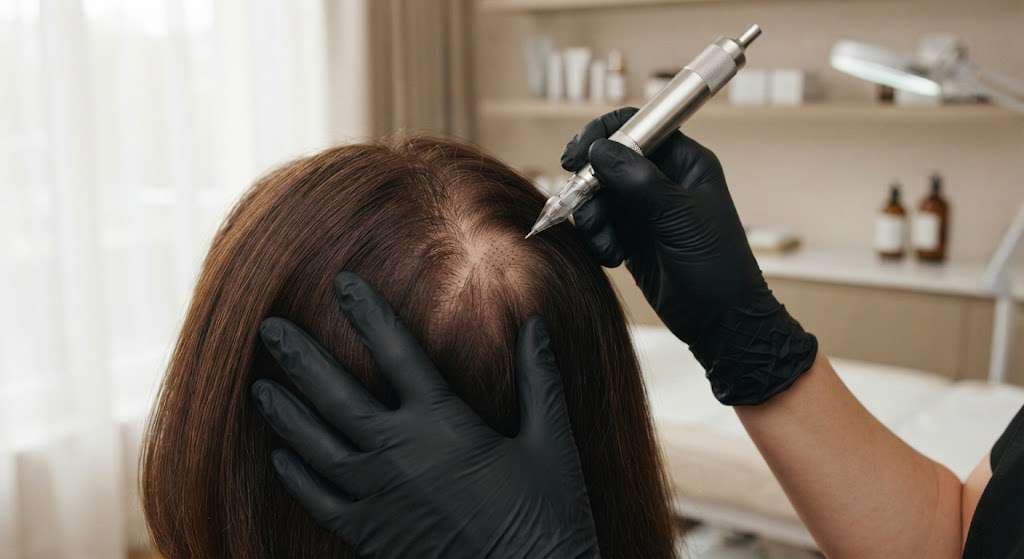
I explain that the cost of SMP for women depends on the area being treated, the pattern of hair loss and the practitioner’s experience. Treatment usually takes two to four sessions, because pigment density is built gradually. I recommend asking for the total treatment plan, including what each session and follow-up support involve.
You’ve probably already spent hours scrolling price lists that don’t quite answer your question, wondering why one clinic quotes £400 and another wants £3,000 for what sounds like the same thing. This article breaks down exactly what shapes scalp micropigmentation pricing for women in the UK, what you should expect to pay across a full course of treatment, and how to spot a quote that’s missing something important. By the end, you’ll know what questions to ask before booking a consultation anywhere.
Scalp micropigmentation for women in the UK generally costs between £600 and £2,500 for a complete treatment, not per session. That figure covers the full course, typically two to four sessions, though it varies significantly depending on how much scalp needs work and how experienced the practitioner is. Anyone quoting a single flat number without asking about your hair loss pattern first isn’t giving you a real price.
Why female SMP pricing varies so much
Female pattern hair loss is different from male pattern baldness, and that difference matters for cost. Most women dealing with thinning hair have diffuse loss across the crown or a widening parting, rather than the receding hairline pattern common in men. This means practitioners are often blending pigment into and around existing hair rather than creating a defined hairline from scratch, which takes a different approach and, frequently, more sessions.
The size of the area being treated is the biggest single factor. A small patch of thinning at the parting costs considerably less than full crown coverage or a case involving alopecia areata across a large section of the scalp. Scarring alopecia, post-surgical scars, or coverage after chemotherapy-related hair loss also tend to need more careful, layered work, which adds time and cost.
Practitioner experience is the other major variable. A technician with five years and hundreds of treatments behind them will usually charge more than someone newly qualified, but that price difference buys you something real: better judgement on pigment depth, colour matching that won’t shift to blue or green over time, and a lower chance of needing costly correction work later. SMP removal via laser is possible if pigment is placed badly, but it’s an expensive, multi-session process best avoided in the first place.
What a typical session structure and price breakdown looks like
Most women need two to four sessions, spaced two to four weeks apart, with each session running one to four hours depending on the area size. Pigment density builds gradually across sessions, starting lighter in the first appointment and increasing in subsequent ones, which is why the process can’t be compressed into a single visit and priced as such.
A realistic breakdown looks something like this: an initial consultation to assess your hair loss pattern and skin type, followed by a first session focused on establishing base density, a second session refining tone and coverage, and sometimes a third to perfect blending in more complex areas. Each session typically costs somewhere between £200 and £600, though clinics price this differently: some quote per session, and others give you one total figure for the full course upfront.
Ask for the total cost of the full treatment plan before you commit to anything, not just the price of session one. A quote that only covers the first appointment can leave you facing unexpected costs partway through, once you’re already invested in the process.
Longevity, touch-ups and the real long-term spend
SMP results typically last four to eight years before fading noticeably, though this varies with skin type, sun exposure and how well aftercare instructions are followed. Touch-ups every four to six years are standard and should be factored into your long-term budget from the start, not treated as a surprise.
A touch-up session usually costs less than the original course, often between £150 and £400, since it refreshes existing pigment rather than building density from nothing. Oilier skin, high sun exposure and faster skin cell turnover all speed up fading, while consistent SPF 30 to 50 use on the scalp helps results hold their depth of colour for longer. Once you’re past the 28-day healing window, daily SPF becomes part of maintaining your result, not just protecting your skin.
Worth knowing: SMP doesn’t stimulate regrowth or change the underlying hair loss process. It camouflages thinning by reducing the contrast between scalp and hair, which is why it works well alongside other approaches some women use, such as minoxidil or low-level laser therapy, for those wanting to address both the visual and the biological side of hair loss.
Questions worth asking before you book anywhere
Price alone tells you very little. Ask how many years of experience the practitioner has and how many female clients specifically they’ve treated, since female pattern loss requires a different technique to male hairline work. Ask to see healed results at the six-month mark, not just fresh, dark, day-one photos, since pigment softens considerably as it settles.
Ask exactly what’s included in the quoted price: is it the full course of sessions, or just the first one? Is a touch-up included within the first year if density needs adjusting? What happens if you’re not happy with the colour match once it’s healed? A practitioner confident in their work will answer all of this clearly, without vague reassurance standing in for actual detail.
Finally, ask about aftercare support. You’ll need to avoid washing, sweating and sun exposure for the first four to seven days after each session, with full healing taking around a month. A practitioner who talks you through this properly, and who you can actually reach if you have questions during healing, is worth more than one who’s simply cheapest on paper.
Frequently Asked Questions
How much does scalp micropigmentation cost for women in the UK?
Most women pay between £600 and £2,500 for a full course of SMP, typically across two to four sessions. The exact figure depends on how much of the scalp needs treating, the pattern of hair loss, and the practitioner’s experience. Always ask for a total course price, not just a per-session figure.
Is SMP for women more expensive than for men?
Not necessarily more expensive, but often priced differently. Female pattern hair loss usually involves diffuse thinning rather than a defined receding hairline, which can mean more sessions to blend pigment naturally with existing hair, affecting the total cost of the treatment plan.
How often will I need touch-ups and what do they cost?
SMP results typically last four to eight years before fading enough to need refreshing. Touch-up sessions usually cost between £150 and £400, considerably less than the original treatment, since they refresh existing pigment rather than building coverage from scratch.
Does scalp micropigmentation hurt, and is numbing cream used?
Most women describe it as mild discomfort rather than significant pain, similar to a scratching sensation. Numbing cream isn’t used as standard, but you’re welcome to apply your own beforehand if you’d prefer extra comfort during longer sessions.
Will SMP regrow my hair or just disguise thinning?
SMP doesn’t regrow hair or change the underlying cause of hair loss. It deposits pigment into the scalp to visually reduce the contrast between skin and hair, creating the appearance of density. Many women combine it with other treatments addressing the biological side separately.
How many SMP sessions will I need as a woman?
I usually explain that most women need two to four SMP sessions, spaced two to four weeks apart. The number depends on the size of the area, the pattern of hair loss and how much blending is needed with existing hair. Pigment density builds gradually, rather than being completed in one visit.
Questions about your scalp?
Book a free consultation with master artist Charlotte Drinkwater and get honest, personal advice.
Book FREE Consultation