
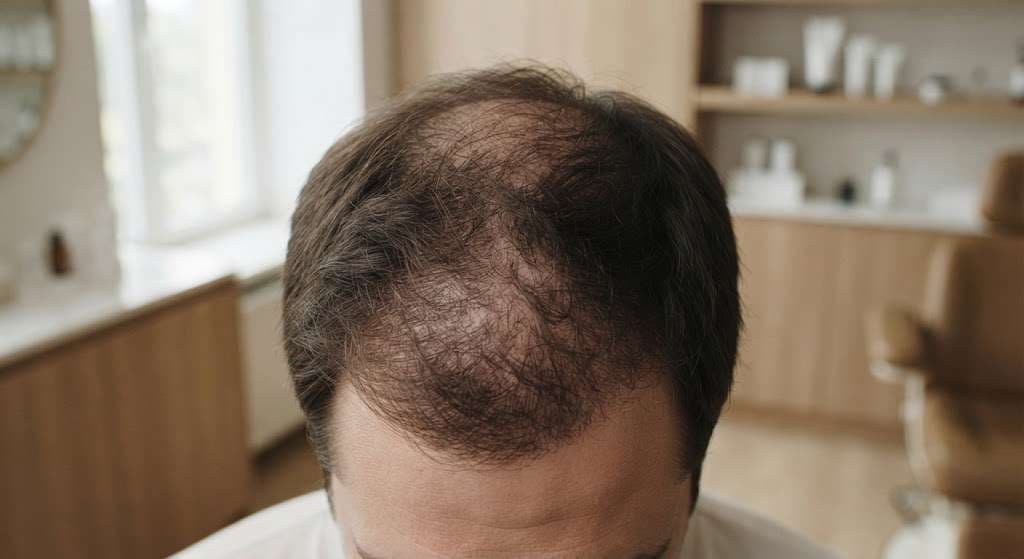
I consider you a good candidate if you have visible thinning, diffuse hair loss or early-to-mid balding, some remaining scalp coverage, healthy skin and a settled hair-loss pattern. I also assess your scalp condition, skin type and expectations, because SMP creates a cosmetic impression of fuller density rather than regrowing hair.
You’ve seen the before-and-after photos and you’re wondering if the same result is realistic for your own head. Not everyone with thinning hair is a straightforward match for male density SMP, and knowing that before you book saves you time, money and disappointment. Here’s exactly what makes someone a strong candidate, and what doesn’t.
Male density SMP is a good fit for men with visible thinning, diffuse hair loss, or early-to-mid balding who still have some hair coverage across the scalp, provided their skin is healthy and their hair loss pattern has settled rather than actively progressing. It’s not suitable for everyone, and the conditions below explain why in plain terms.
1. Your hair loss has stabilised, not actively progressing
If your hairline or crown is changing month to month, that’s a signal your hair loss hasn’t settled yet. Male density SMP works by matching pigment to your current hair colour and density, so if the pattern keeps shifting, the result can look mismatched within a year or two.
This matters most with alopecia areata, where patches can appear and disappear unpredictably. I’d usually want to see six to twelve months of stability before treating, so we’re not chasing a moving target.
2. You’re somewhere between Norwood stage 3 and stage 6
Male pattern baldness, driven by DHT shortening the hair growth cycle, affects at least half of men by age 50, and it follows a fairly predictable pattern. Men in the middle stages, from noticeable crown thinning through to significant baldness with some perimeter hair remaining, tend to get the most convincing results from density work.
If you’re at stage 1 or 2 with only faint thinning, SMP can still add density, but the effect is subtler and some men prefer to wait until the contrast between scalp and hair is more pronounced. If you’re at stage 7 with a fully bald scalp, that’s a different treatment approach entirely, closer to a full scalp pattern than density blending.
3. Your scalp skin is calm, not inflamed
Active scalp acne, a psoriasis flare-up, or eczema mid-flare are all reasons to wait. Pigment deposited into inflamed or compromised skin doesn’t heal predictably, and it can trigger a worse flare in the treated area.
This isn’t permanent. Once the condition is under control and your skin has been calm for several weeks, most men can go ahead. If you have a chronic condition like psoriasis, we’d work around active patches and plan sessions for periods when your scalp is at its calmest.
4. You don’t have keloid-prone skin
If you scar easily or have raised, thickened scarring from previous cuts, piercings or surgery, that’s worth flagging before we start. Keloid-prone skin can react differently to repeated needle work, and it’s one of the genuine contraindications for SMP.
It doesn’t automatically rule you out, but it does mean a more cautious approach: a small test patch first, and an honest conversation about what your skin has done in the past. Your history is the best predictor here, not guesswork.
5. You understand what SMP does and doesn’t do
SMP doesn’t regrow hair or treat the underlying cause of balding. It creates the visual impression of hair follicles and density using pigment placed at the epidermal-upper dermal interface, so the effect is entirely cosmetic. Men who go into it expecting thicker natural hair afterwards are looking for the wrong treatment.
The men who are happiest with their results are the ones who understand exactly what they’re buying: a convincing illusion of a fuller, denser look, not a change to what’s happening under the skin. That clarity matters more than people expect.
6. You’re not mid-way through certain medical treatments
Chemotherapy, active skin infections, or being on blood-thinning medication without medical clearance are all reasons to pause rather than proceed. Pigment retention and healing can both be affected, and safety comes before scheduling.
This is usually temporary. Once treatment has finished or your GP has confirmed you’re clear, we can revisit timing. It’s always worth mentioning any medication or health condition at your consultation, even if you’re not sure it’s relevant.
7. Your skin type and colouring can take pigment predictably
Very oily skin, sun-damaged skin, or skin that’s naturally prone to rapid cell turnover can cause pigment to fade faster than average. This doesn’t disqualify you, but it does affect how we plan your touch-up schedule.
Fairer skin with grey or very light hair, and darker skin tones, both respond well to SMP, but the pigment mix and technique differ. A proper skin assessment at consultation tells us far more than guessing from photos ever could.
If most of these apply to you, you’re very likely a good candidate. If one or two don’t, that’s not necessarily the end of the road; it usually just means timing or a slightly different approach. A face-to-face consultation is still the only way to know for certain, because your scalp, skin and hair loss pattern are unique to you.
Frequently Asked Questions
Who is a good candidate for male density SMP?
Men with stable hair loss (Norwood stages 3 to 6), diffuse thinning, or scarring alopecia, who have healthy scalp skin and no active inflammatory conditions, are generally strong candidates. A consultation confirms suitability based on your specific scalp condition, skin type and hair loss pattern.
What are the main SMP contraindications for men?
Active scalp acne, psoriasis or eczema flare-ups, keloid-prone skin, active alopecia areata that hasn’t stabilised, and certain ongoing medical treatments like chemotherapy are the main contraindications. Most are temporary and can be reassessed once the underlying condition settles.
Is scalp micropigmentation suitable for me if I have active alopecia?
It depends on stability, not diagnosis. If your alopecia areata is actively spreading or patches are changing shape, waiting six to twelve months for stabilisation is recommended before starting SMP, so the pigment pattern matches your long-term hair loss rather than a temporary state.
Can I get male density SMP if I have sensitive or oily skin?
Yes, though oily or fast-turnover skin tends to fade pigment slightly quicker, which affects your touch-up timeline rather than your eligibility. A skin assessment at consultation determines the right pigment approach and sets realistic expectations for how long your result will hold.
Does numbing cream affect who can have SMP?
Numbing cream isn’t used as standard and isn’t a factor in candidacy, but clients who prefer it can apply their own beforehand. It’s a comfort choice rather than a medical requirement, and it doesn’t change the healing process or final result.
Does male density SMP regrow hair?
I explain that SMP does not regrow hair or treat the underlying cause of balding. It creates the visual impression of hair follicles and density using pigment placed at the epidermal-upper dermal interface. The result is cosmetic, so it does not make natural hair thicker beneath the skin.
Questions about your scalp?
Book a free consultation with master artist Charlotte Drinkwater and get honest, personal advice.
Book FREE Consultation