
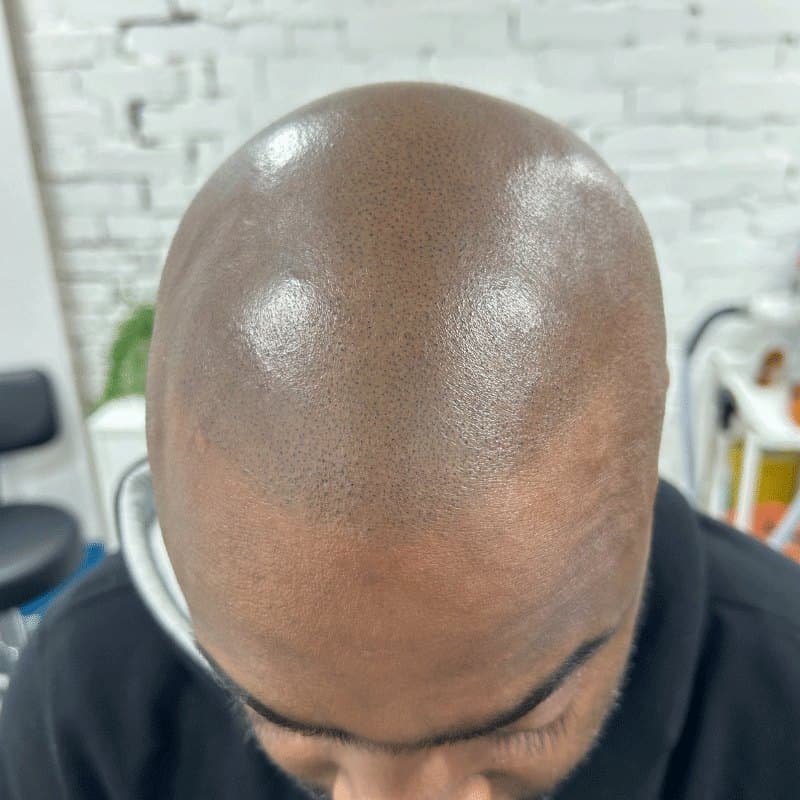
Yes, you can usually shave your head after SMP for thinning hair, but not during the early healing period. Once the scalp has healed, shaving may make the pigment more visible and create a closer-cropped appearance. The best length depends on how much natural hair remains and whether your treatment was planned for density or a shaved look.
What changes when you shave after SMP?
When I carry out SMP for thinning hair, I work with the hair you still have. The pigment is placed between and around existing hairs to reduce the contrast between your scalp and hair. This creates the appearance of greater density, rather than replacing the hair itself.
Shaving changes that balance. With less hair above the scalp, the implanted dots may become easier to see. Your result may then look more like shaved-head SMP than a density treatment. That is not necessarily a problem, but it can look different from the finish we planned when your hair was longer.
A close shave can also make the natural pattern of your hair loss more obvious. Some people prefer this neat, consistent appearance. Others find that leaving a small amount of length gives a softer transition and helps blend the pigment into the remaining hair.
There is no single correct hair length. I assess your hair colour, skin tone, existing density, hairline and the areas treated before recommending how closely to clip or shave.
How soon can you shave after the treatment?
I would not advise shaving during the early healing period. Immediately after treatment, the scalp can be sensitive, red or slightly swollen, and the pigment is still settling. A razor or close shaver can irritate the treated skin and interfere with sensible aftercare.
For the first part of healing, keep the scalp dry as instructed. Avoid heavy exercise, steam rooms and hot showers that make you sweat, and protect the treated area from direct sun exposure for several days. I will explain your aftercare at your appointment and tell you when your scalp is ready for your usual grooming routine.
The timing varies because healing is affected by the treatment area, your skin and how your scalp responds. Rather than following a fixed internet timetable, wait until the skin is fully settled and follow the advice I give you. If there is continuing redness, soreness, weeping or unusual irritation, do not shave over it and ask for professional guidance.
Once healing is complete, shaving should not remove the pigment. SMP is placed into the upper layers of the skin, so cutting the hair above the skin does not remove it. It can, however, change how strongly the result is seen.
Is a shaved look suitable for thinning hair?
It can be, particularly when thinning is diffuse or has progressed enough that keeping longer hair no longer gives the appearance you want. Some clients prefer a consistent close-cropped style because it avoids trying to disguise thinner areas with styling products or fibres.
For other clients, keeping a little hair is more suitable. Density treatment is designed to sit beneath existing hair, including thinning at the crown or across the top of the scalp. If you shave very closely, the visual effect shifts towards recreating the look of short follicles across the scalp.
I discuss this before treatment because the desired grooming style affects the design. If you already know that you may shave later, tell me at consultation. We can consider whether the hairline, temples and thinning areas should be planned to look natural at both your usual length and a shorter length.
If you are weighing up the options, my guide to scalp micropigmentation treatment explains what SMP can and cannot do. It does not grow hair or alter natural hair growth. It creates a visual impression of fuller hair or a shaved head.
Should you use a razor, foil shaver or clippers?
The right tool depends on the look you want and how your skin reacts. Clippers leave some hair above the scalp, which may soften the contrast and suit a density result. A foil shaver or razor gives a closer finish and may make the follicle effect more apparent.
I recommend introducing any close grooming gradually after healing. Start with the method you normally tolerate well, keep the equipment clean and avoid pressing hard. If your scalp is sensitive, a slightly less close finish may be more comfortable and may blend better with your remaining hair.
Look at the result in ordinary daylight rather than judging it only under a bright bathroom light. Hair length, lighting and the direction of your hair can all alter how much scalp appears visible. If you are unsure, bring photographs of the style you have in mind to your consultation.
My article on keeping your hair long after SMP covers the other side of this decision. Many people assume SMP only works with a shaved head, but pigment can be placed between existing hairs when the aim is to reduce scalp show-through.
What should you check before choosing SMP for thinning hair?
Start by checking whether your hair loss pattern is stable and understood. SMP is a cosmetic treatment, not a diagnosis or treatment for an underlying condition. If your thinning is sudden, patchy or changing quickly, speak with an appropriate healthcare professional before proceeding. Female pattern hair loss can also resemble other conditions, so medical assessment may be sensible before treatment.
Then review healed examples of the practitioner's work, especially hairlines and density treatments. A hairline that is too straight, low or heavy can look unnatural, so it should be designed around your facial structure, age and preferred style. Ask how the pigment is selected and how the practitioner plans for changes in your hair over time.
Safety matters as well. Disclose allergies, skin conditions and relevant medical history. Choose a licensed, experienced practitioner who follows good hygiene and cross-contamination procedures. At Simply Scalp, I remain personally involved from your enquiry and consultation through treatment and aftercare. I do not delegate consultations or treatments.
I do not use numbing cream as standard, although you can apply it beforehand if you prefer. My role is to make sure the plan fits your scalp, your existing hair and the way you genuinely expect to wear it.
Simply Scalp is based in Purley, South London, and you can also see SMP results for Epsom clients. I will not promise that every hairstyle will look identical after treatment. Instead, I will explain what is realistic, including the fact that some visible scalp can remain normal.
If you are considering shaving after a density treatment, bring that question to your consultation so the treatment can be planned with your preferred grooming style in mind.
If you would like to talk it through, you are welcome to book a consultation with me.
Frequently asked questions
Will shaving make my SMP look darker?
It can make the pigment appear more noticeable because there is less natural hair covering or softening the dots. That does not necessarily mean the pigment has changed colour. Lighting, hair thickness and the closeness of the shave all affect the impression. I can assess the balance before you choose a shorter style.
Can I switch from density SMP to a shaved-head look later?
Possibly. The existing treatment may already provide a useful foundation, but the final appearance depends on how much hair remains and where the pigment was placed. A very close shave can reveal differences between treated and untreated areas, so I would reassess your scalp before recommending any further work.
Do I need to shave my head before thinning hair SMP?
Not usually. Density treatment is specifically designed to work between existing hairs, so shaving is not automatically required. The suitable approach depends on your hair length, thinning pattern and desired result. We discuss whether to keep, trim or temporarily shorten the hair before treatment during consultation.
Can SMP hide a receding hairline if I shave completely?
It can reduce the contrast between the scalp and the short hair appearance, but it cannot recreate growing hair or make an unsuitable hairline look natural. The design should reflect your facial structure, age and realistic hair pattern. I assess the hairline carefully because it is one of the most visible parts of the result.
What if my hair becomes grey after thinning hair SMP?
Changes in your natural hair colour can alter the contrast between the hair and pigment. The pigment is selected to match your current follicle colour and should be planned with future changes in mind. If your hair becomes noticeably grey, we can reassess how you wear it and whether a review is appropriate.
Can shaving damage existing hair or affect future hair loss?
Shaving cuts the hair at or near the skin surface and does not change how the follicle grows. It also does not stop or reverse hair loss. The main concern after SMP is avoiding irritation while the skin heals. Once the scalp is settled, use a grooming method your skin tolerates comfortably.
Can SMP be removed if I later dislike the shaved appearance?
SMP is intended to be long-lasting, but laser treatment can remove it later. Removal is more involved than changing a haircut, and the outcome depends on the original pigment, placement and your skin. This is why I recommend deciding on the likely grooming style and reviewing healed work before treatment.
Questions about your scalp?
Book a free consultation with master artist Charlotte Drinkwater and get honest, personal advice.
Book FREE Consultation