
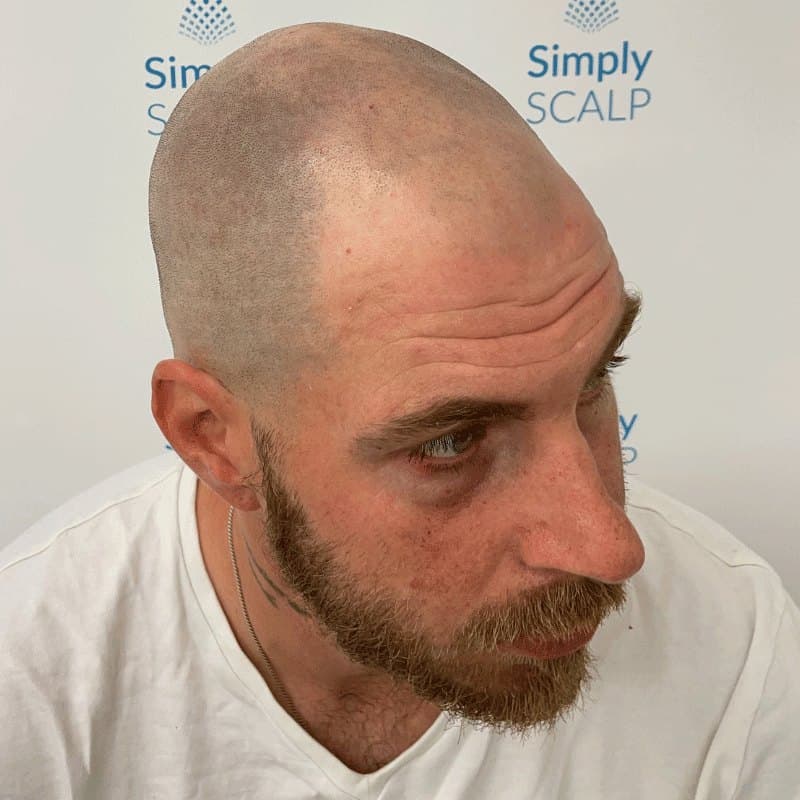
The most suitable hairline is the one that balances your facial structure, age, natural recession pattern and preferred style. For a shaved head, I usually design a soft, irregular hairline rather than a perfectly straight edge. We agree the shape together before treatment, so it feels like you, not a template.
What do I look at when designing an SMP hairline?
When you come to me for a consultation, I do not begin by choosing a fashionable shape and placing it on your scalp. I look at your face from the front and side, your existing hairline if you have one, your temples, your age and the way you want to wear your hair.
Your facial proportions matter because the hairline frames the face. A design that is too low can make the forehead look unusually short, while one that is too high may feel harsher than you expected. The right position is not necessarily where your hairline was in your teens. It should look believable for you now and remain appropriate as your appearance changes.
I also consider the natural pattern of recession. Many people do not have a perfectly symmetrical hairline, and trying to create absolute symmetry can make scalp micropigmentation look artificial. Small, controlled irregularities and a gradual transition at the front usually look more like real stubble.
Before any pigment is applied, I mark the proposed area and show you the design. This is the point where we can adjust the height, corners, temple shape and overall softness. I want you to feel comfortable with the plan before we proceed.
Which hairline shapes can work for a shaved head?
There is no single hairline shape that suits every client, but these are useful ways to describe the options we may discuss:
- Soft and gently rounded: This follows the curve of the forehead and can create a subtle, understated finish.
- Soft widow's peak: A modest central point can work well where it reflects your natural pattern, rather than looking sharply drawn.
- Higher, mature hairline: This can be a sensible choice for someone who wants a believable adult hairline rather than a recreated teenage one.
- More defined front edge: Some clients prefer a clearer barbered appearance, although I still keep the front varied and avoid a solid painted line.
The temples are just as important as the centre. If they drop too far forward or are shaped in a way that does not match your head, the result can look disconnected from the rest of the scalp. I blend the sides into the existing recession or the planned shaved-head pattern, depending on how much hair remains.
If you are considering scalp micropigmentation for men, the same principle applies: the design should fit your face and your grooming habits, not simply imitate an example photograph.
Should my hairline be sharp or soft?
For most shaved-head treatments, I recommend discussing a soft front edge first. A soft hairline uses lighter, finer impressions towards the front and gradually builds behind them. This creates the appearance of short follicles without making the boundary look like a drawn line.
A sharper edge can be suitable for some people who regularly maintain a very close shave and genuinely prefer a crisp finish. However, a dense, straight edge can be unforgiving. It may also look less natural when your hair grows slightly, when the skin changes with age or when you view it from the side.
My aim is not to make the scalp look painted or completely covered. Some visible scalp between impressions is normal and important. The pigment is matched to your current hair follicle colour, then layered carefully so the result resembles stubble and remains in proportion to your natural hair.
This is why I encourage you to review a practitioner's healed hairline work, not just freshly completed photographs. A good consultation should explain the proposed design, pigment choice, skin considerations and what you can realistically expect.
Can a hair tattoo hairline be designed around my existing hair?
A shaved-head result is not the only way to use this treatment. Scalp micropigmentation can also be placed between existing hairs to reduce the contrast between your hair and scalp. This can be useful where thinning is diffuse, the crown shows through or a receding front makes the hair look less dense.
In that situation, I assess the density and direction of your existing hair before deciding whether a new frontal line is appropriate. Sometimes the most natural plan is to soften the transition rather than create a noticeably new boundary. The finish also needs to work with the length you actually keep, so your usual grooming routine is part of the discussion.
You can read more about wearing your hair longer after SMP if you are not certain that a fully shaved style will suit your lifestyle. I will be honest if your preferred hair length and proposed design do not sit comfortably together.
What happens before and after the hairline treatment?
Before a session, wash your hair and scalp as advised, and tell me about allergies, medical conditions, previous scalp treatments and any earlier cosmetic tattooing. I remain personally involved from enquiry and consultation through to treatment and aftercare, so you will always deal directly with me at Simply Scalp in Purley, South London.
I use anaesthetic as part of the treatment process. I do not use numbing cream as standard, although you can apply it beforehand if you prefer. Comfort, skin condition and the design are considered together rather than treated as separate details.
The treatment is completed over a planned course of sessions, allowing the pigment to settle and the design to be refined. I will explain the expected process at consultation rather than promise a fixed outcome, because the amount of work varies with the area, your skin and whether you have previous pigment.
After treatment, keep the scalp dry during the initial healing period. Use a shower cap when bathing, avoid heavy exercise, steam rooms and hot showers that cause sweating, and protect the scalp from sun exposure for several days. Follow the aftercare instructions I give you, and do not pick at flaking or light scabbing.
Once healed, use broad-spectrum sunscreen on the scalp to help protect the pigment. SMP is intended to be long lasting, but it can fade gradually and may need maintenance. It can also be removed later with laser treatment if circumstances or preferences change.
How do I know whether this approach is right for me?
A consultation is the best way to assess suitability. I look at your scalp, hair loss pattern, skin type, expectations and the style you want to maintain. I also need to know if you are prone to keloid scarring, as this can make cosmetic tattooing unsuitable.
If you have active or changing hair loss, the design may need more careful planning. SMP does not grow hair, alter natural growth or treat the underlying cause of hair loss. It creates a visual impression of follicles or density. Where medical or hormonal factors may be involved, those should be assessed separately.
You can explore my scalp micropigmentation treatment information before getting in touch. You can also look at SMP results for Epsom clients to get a feel for the type of finish you prefer.
The best hairline is one you can live with comfortably, not one that only looks impressive on the day. If you would like to discuss your options, you are welcome to book a consultation with me.
Frequently asked questions
Can I bring a photograph of my old hairline?
Yes, an old photograph can help me understand your previous hairline and how you see yourself. It is useful reference rather than a design to copy exactly. I still need to consider your current facial proportions, age, hair colour, scalp condition and preferred hairstyle before recommending the final position.
What if I do not know which shape I prefer?
That is very common, and you do not need to arrive with a finished design. During consultation, I can mark possible positions and discuss softer or more defined options. We can consider your face from different angles and talk through how each choice may look with your usual shaving routine.
Will an SMP hairline look the same every day?
The appearance can vary slightly with lighting, skin condition and how closely you shave. The pigment does not wash away with shampoo, but natural skin changes and gradual fading occur over time. Following aftercare and protecting the scalp from strong sun is advised, and I will explain what to expect at consultation.
Can you copy a celebrity or barbered hairline?
I can use a photograph to understand the style you like, but copying another person's hairline exactly is rarely appropriate. Their head shape, facial proportions, hair colour and recession pattern will be different. I use your reference as inspiration, then adapt the design to look credible on you.
What happens if I have old SMP already?
Previous pigment needs to be assessed before a new hairline is planned. Its colour, density, placement and any spreading or blurring can affect the options. Sometimes improvement may be possible by working carefully around it, while other cases may need laser removal before redesign. This is assessed at consultation.
Can the design change if my natural hair loss continues?
It can, but future hair loss should be discussed before treatment. A hairline that looks balanced now may need to connect with further recession later. I can plan around your likely grooming style and existing pattern, while being clear that SMP does not stop or reverse natural hair loss.
Questions about your scalp?
Book a free consultation with master artist Charlotte Drinkwater and get honest, personal advice.
Book FREE Consultation